“A tavola non si invecchia”. - Italian proverb (At the table with good friends and family you do not become old).

Sharing authentic Italian recipes entrusted upon me through the privilege of being invited into many Italian homes and kitchen’s abroad. I travel, cook, eat, share, learn and photograph my experiences, a truly soul enriching journey. There are now over 100 recipes on this blog to search from. I am a Melbourne born girl who now resides in Pietrasanta, Italy. Sharing my love for food and all things Italian with you. I am not a professionally trained chef, just a person that really loves cooking and has made my passion my reality! Through talent and drive I now work as a private chef in some of the most prestigious private villa`s here in Tuscany, Italy!

Showing posts with label pasta. Show all posts

Sunday, November 18, 2018

Pasta al forno con tonno- Tuna bake

It's a balmy Sunday evening and my sister is due home tomorrow as she is currently in hospital with the arrival of our family's first bambino. 
I couldn't help myself. It's like instinct takes over. How can I help I ask myself, as I glance over and discover my favourite brand of tuna and pasta in her pantry (originally put there by me). This would have to be helpful, right? Coming home, and finding a ready made, relatively nutritious meal just waiting to be reheated.
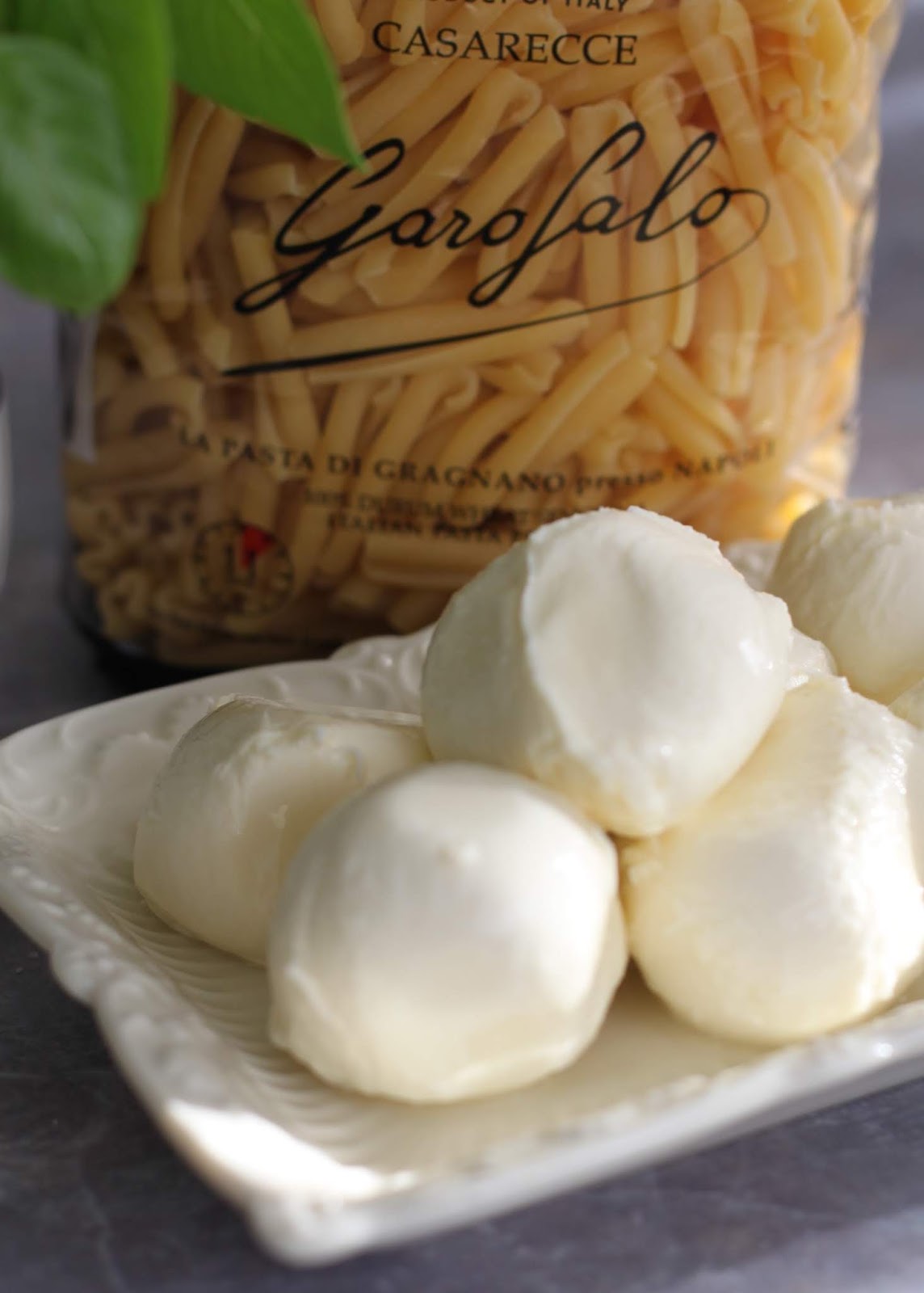
It's almost embarrassing that I didn't go to more effort, and that I am actually posting this recipe. But, once again the best things really don't need to be complicated. Stick to good quality ingredients, such as: Italian tuna in olive oil, fresh mozzarella, basil and good quality pasta. Combined with the correct cooking times, and you have a winning simple dish.
This `pasta al forno`, is basically an Italian version of a tuna bake. I am not typically a pasta bake kind of person, but it is perfect for the purpose of making something in advance. My instincts would also lean towards using penne pasta, however I used casarecce in this, as I took advantage of what was in the pantry.  
It is a written rule in Italy that any form of cheese should never be mixed or topped on seafood. However, when it is canned tuna the rule can be bent a little, and fresh mozzarella is permitted to be added. 
Bake this, and I'm sure that you will agree. This is the perfect summer meal, bursting with classic Italian flavours!
                                
What you need:
700 ml of Italian tomato passata. Homemade is even better.
500gm pasta. I used casarecce from Garofalo 
2 x 160g Italian tuna in olive oil. I used Delicious
250g fresh mozzarella
handful of fresh basil leaves
4-5 cloves of organic garlic
good splash of extra virgin olive oil
Sicilian sea salt
How to make:
1: Boil water in a large pot. Add a good amount of salt to the pot. Add the pasta and stir well. Cook the pasta according to the instructions on the packet. If it suggests 12 minute cooking time, drain the pasta at 10 minuets. As it will continue to cook when baked in the oven, you do not want soggy pasta. Drain the pasta and set aside.
2: Lightly smash the whole olive cloves and add to the olive oil. Cook over a light heat, this will infuse the oil with the favour of the garlic. Remove the whole gloves. 
3: Drain slightly the oil from the tuna and add to the pan. Add also a handful of basil leaves. Stir well until it has heated through.
4: Add the tomato passata, salt to taste. Summer for 20 minutes.
5: Add the pasta to the sauce, and stir through to make sure the pasta is coated evenly. Chop the mozzarella into large chunks, and add the chunks to the pasta mix. Lightly stir through.
6: Add the pasta to a large baking tray, typically used for lasagne. Keep in the fridge or bake immediately. Bake for 20 minutes.
#pasta #tonno #tuna #tunabake 

Sunday, December 16, 2012

penne with broccoli- penne con broccoli

Ok, I am back in action peeps! I told you I would start sharing recipe's again. So, here is my first recipe from Italy. I thought this one to be fitting as it is the epitome of simplicity, one of the things I love most about Italian food. All you need is a handful of ingredients, most of which you will probably have in the pantry. This is an example of how food does not need to be complicated but can still be delicious. The other great factor with this dish is that it requires minimal time, no skill, and everything can be prepared in one pan....perfect! The secret ingredient that accelerates the flavour is anchovies (optional of course)! 

 What you need:
300g penne pasta
200-300g broccoli (medium size)
1/3 cup olive oil
three fillets of anchovies (options)
two cloves of garlic
a little salt
freshly grated of Parmesan cheese

How to make:
1: Bring a medium size pot of water to the boil, add salt to the water. Clean and remove the foliage from the broccoli- roughly chop into medium size pieces.
2: Add the pasta and broccoli to the pot of salted water. Cook for roughly 10 minutes (according the the instructions on the packet of pasta)
3: Smash and roughly chop the garlic and also anchovies if desired
4: When the pasta/broccoli is ready remove and strain and shake (this will break up the broccoli pieces), set to one side. Use the same pot- add the olive oil, anchovies, and garlic. Cook for about 2-3 minutes, do not brown the garlic.
5: Add the broccoli/pasta back to the oil mix and stir through, making sure each piece of penne is evenly coated with olive oil
6: Serve at the table and grated fresh Parmesan cheese on top

Friday, August 17, 2012

Acini di pepe in brodo (pasta in broth)

This one is perfect for combating the sniffles that seem to be prevalent during these cold winter months. Making this soup actually reminds me of making it for a friend last year in Italy as he was suffering from a severe case of 'man flu'. He requested it on a cold blistery day, but it had to be just as his Mamma makes it. It is the same concept as 'tortellini in brodo' (refer to recipe), but the tortellini is replaced with the cutest little balls of pasta called 'acini di pepe' which translates to peppercorns. As mentioned in my post for tortellini in brodo, it is common in the south of Italy to add freshly squeezed lemon juice and chili flakes. I think it also works perfectly in this instance. A concept my Tuscan friends initially found bizarre, but have embraced. I think for the purpose of fighting a cold, the chili helps clear the nose and the lemon add freshness. Of course, no matter what region you are from in Italy it is would be sacrilegious not to add freshly grated parmesan. A bowl of this humbling soup will have you feeling better in no time. 
What you need:
one cup of acini di pepe 78 (available from delicatessen's)
one litre of homemade vegetable or chicken stock
sprinkling of freshly grated parmesan
optional:
lemon
chill flakes
How to make:
1:  Make home-made vegetable or chicken broth (refer to my broth recipe)
2: Bring one litre of broth to the boil, add 1/2- 1 cup of pasta (depending on if you prefer more pasta or broth). I add about 3/4 of a cup
3: Cook with a lid on for about 10 minuets, according to directions on the packet of pasta
4: Serve immediately, squeeze some lemon juice, chili flakes and grate parmesan
In Verona, Italy during Winter

Monday, July 9, 2012

Spaghetti aglio olio e peperoncino (spaghetti with oil & chillies)

Who does not like spaghetti? I love it, and I pretty much like it any which way. When spaghetti is good is it heavenly good but when it is bad it is unpalatable. This recipe is super easy to make, you can almost make it with your eyes closed.  I am sure you have all of the ingredients in your pantry. All that is required is that the spaghetti is cooked to perfection (al dente), that a good quality oil is used and the pasta is well coated in it. When pasta is cooked 'al dente' it is much better for digestion and has a lower GI. Just because there are only a few ingredients does not mean this dish is lacking in flavour.  Even better, there is only one pot to clean- perfect for a mid week whip up!
What you need:
one 500g packet of spaghetti (I used number 4)
two small red chilies
2-3 cloves of garlic
100 mls extra virgin olive oil
hand-ful fresh flat leaf parsley leaves 
salt and pepper
How to make:
1: Place the spaghetti in a large pot of well salted boiling water.  Follow the instructions on packet regarding the amount of time the spaghetti needs to cook (8-12 minutes).  Remove the spaghetti when it is 'al dente'- soft to touch but still firm to bite.
2: Strain the spaghetti, set to one side.
3: Quickly add the oil, garlic and chilli to the same pot and heat through (use a spoon to mush the garlic and chilli, infusing the flavours with the oil)
4: Add the spaghetti back to the pot and stir through. Lightly salt if needed and cracked pepper.  Add some fresh torn parsley leaves.

Tuesday, May 29, 2012

Pasta con verdure miste (mixed vegetables with pasta)

Today I found myself scrolling through my endless photographs of food. Time has not permitted me to write about even half of them.  Given that today is Tuesday and this dish is so quick and simple to prepare, I thought I would share with you- perfect for a mid week whip up!  I have listed all of the vegetables used in this instance, but of course you can substitute for your favourites.  The key is to select fresh and seasonal produce, you can't go wrong!
What you need:
two medium eggplant plants
two medium shallots (red onion)
one yellow capsicum
one punnet roma baby tomatoes
5-6 garlic gloves smashed
handful fresh basil
1/2 cup extra virgin olive oil
salt and cracked black pepper
fresh pasta 
How to make:
1: Cut the vegetables roughly the same size.  Cut the tomatoes in half.  Smash garlic gloves and roughly chop.  
2: Place vegetables evenly on a large oven tray.  Drizzle over oil, salt and pepper.  Use your hands to make sure vegetables are evenly coated in oil.
3: Place in a pre-heated 180 degrees oven for 30-40 minutes or until vegetables are cooked through.
4: Add cooked vegetables to drained and lightly oiled fresh pasta (remember to add salt to pasta water), gently stir through.  Tear fresh basil leaves on top.  Squeeze a little lemon juice if desired!


Lasagne

This hands down is one of my favourite things to make, although I rarely do.  Although it is simple to make, it is a tedious process which results in a sense of occasion.  I normally set aside at least half a day to make it, especially when making my own lasange sheets.  I always make more than required as it is always nice to have left-overs, especially when it has taken so much effort!
As discussed in my "ragu alla bolognese' recipe, there are many different ingredients that can be added- no two recipes are the same.  I have tasted different varieties of lasagne where various cheeses have been used, such as ricotta and mozzarella (not the soapy variety we buy in Australian supermarkets). A friend's Sicilian grandmother used to add a thin layer of whisked eggs resulting in a creamy, rich texture.  I like to keep mine simple, I have learnt in this instance "less is more"- a wise Italian woman taught me this!
The main four key fundamentals needed are: meat sauce, bechamel sauce, pasta sheets, parmesan cheese.
Invite your best friends over to share in the fruits of your labour!
What you will need (this will make two large lasagne trays):
1: Bolongese sauce (refer to recipe)
2: Bechamel sauce (refer to recipe)
3: Make fresh pasta sheets (refer to recipe), or buy fresh pasta sheets (about 700g)
4: 250g finely grated FRESH parmesan cheese (you can ask your local deli to grate for you)
How to make:
1: Make the meat sauce first, set aside
2: Make the bechamel sauce, set aside (if it becomes too thick add a little milk)
3: Cook the pasta sheets in salted boiling water, remove and place on tea-towel
4: Spread a thin layer of meat sauce in large tray, cover with pasta sheets and cut to size, spread pasta sheet with bechemel sauce, sprinkle generously with grated Parmesan cheese
5: Repeat this process until you have used all of the ingredients.  There should be 4-5 layers of pasta.  Top the final layer of pasta with a generous amount of bechamel sauce and grated parmesan cheese.
5: Cover with tin foil and place in the fridge (leave overnight to enhance flavour)
6:  Cook in a pre-heated 180 degrees oven for 1/2 hour, remove foil and cook a further 10 minuets until golden.
Buon apetito!

Monday, May 28, 2012

RagĂą alla bolognese (bolognese sauce)


I can see Italian's now throwing their hands in the air "ai ai ai that's not how you make it"!!  
Yes, there are many ways to make bolongese sauce, and admittedly I change the way in which I make it from time to time.  Today, I simply decided to share with you the way in which I made it today, trust me there were no complaints!  This recipe has the fundamentals of how I usually make my sauce, and is perfect for winter!
The first known reference to "ragu alla bolognese" dates back to the late 18th century originating from Bologna.  It is traditionally served with tagliatelle pasta. There is so much love, care and attention needed when making ragu. My theory is that if I go to the effort needed to make the sauce, then I always make my own fresh tagliatelle pasta. 
Last year I gave my Italian friend a `care pack`, which included a container of my ragu, pasta and some other items. On Sunday he invited his Mother over for lunch, and unbeknownst to me served my sauce and pasta. His Mother took a mouthful, there was silence,  then her eyes welled with tears as she said that this pasta takes her back to her childhood, when her Nonna used to cook the same tasting sauce. Filled with aromatic spices. I still get a little chocked up thinking about that special moment. That food can play such an important part of our memories, emotions and encounters.  
On a visit to Bologna it confirmed that using a variety of meats is the key to making a more complex sauce, and traditionally it was made using predominantly veal.
I have tried and loved many sauces, from the North to the South of Italy (the sauce becomes lighter and more tomato based further south).  Each sauce is different, and each household holds a secret! 
This is a robust sauce, that I feel respects the origins and authenticity!  Serve with fresh homemade pasta, top with freshly grated parmigiano cheese and enjoy with red wine. Bliss! 
What you need:
500g mince beef
250g mince veal
250g mince pork
four juicy Italian pork sausages 
two x 400g tomato pulp tins (made in Italy)
1/2 cup olive oil
one onion
two carrots
two celery stalks
5-6 gloves garlic
handful fresh parsley
handful fresh sage
handful fresh oregano
large sprig of rosemary 
1-2 tablespoon fresh grated nutmeg
three bay leaves
500mls red wine
three cups beef stock (homemade)
two tablespoon tomato paste/concentrate
salt and black pepper to taste
How to make:
1: First you need to make the 'sofritto' (the Italian term for combining evenly chopped pieces of carrot, onion, celery, garlic and parsley to a pan).  Cooked the vegetables in the olive oil until soft.  TIP: add a little salt which will help slow down the cooking process and result in perfectly soft, translucent onions.
2: Add the mixed meats to the large saucepan and lightly brown.  Continue to stir and make sure meat is evenly cooked through.
3: Add the herbs, nutmeg, salt and pepper- stir through.
3:  Add the wine and cook for a further five minuets.
4: Add the remaining ingredients.  Cover and simmer, occasionally stirring for two hours.  Make a day ahead to allow the flavours to deepen!
rooftop view over Bologna
pasta making with Stephanie


Friday, April 6, 2012

Good Friday

What did you eat today, Good Friday?   Although Good Friday in Italy is not a day of celebration as such, it is a day where Catholics do not consume meat (some fast altogether).  An alternative is fish, and I normally take the opportunity to make "spaghetti alle cozze" (spaghetti with mussels).  This has become my own little tasty tradition, and enjoyed with my family and friends (sometimes randoms too). I thought I would share this with you, recipe to follow!

Tuesday, December 6, 2011

Tortellini in Brodo (broth with tortellini)

Ok, admittedly I did not make the tortellini in this recipe. However I do not feel guilty as I purchased these little delicacies from one of the oldest pasta houses in Bologna, the origin of "tortellini in brodo".  Italians enjoy eating this around Christmas time, normally for Christmas dinner or boxing day. To eat something somewhat lighter than the previous heavy meals consumed during the festive season.  One of the only rules for making this celebratory soup is that you must make it using home made stock (refer to chicken stock recipe).  Traditionally in Italy the tastiest way to make the stock is by using "capon" (a male chicken).  The traditonal filling and the ones that I purchased in Bologna are filled with pork, mortadella and parmigiano.  As it is now winter in Italy, sitting around the table enjoying a hot bowl of "tortellini in brodo" warms your soul, even when it is cold outside!
How to make (to serve six people):
Bring two litres of stock to the boil, then add about 250 grams of tortellini.  Boil the tortellini in the broth for the amount of time according to the instructions (about ten minutes). Serve in warm bowls and top with freshly grated parmesan cheese.  Some of my Italian friends from the South of Italy also add some freshly squeezed lemon juice and chilli flakes!


Buon Apetito
#pasta #tortellini #brodo #broth #soup #stock 

Friday, November 11, 2011

Pasta fresca con salsa Siciliana (fresh pasta with Sicilian sauce)


This sauce is SO EASY to make and the flavours are so wonderfully tasty.  This is the perfect example of "less is more"!  You really only need to add a few good quality ingredients.  If time does not permit you can use store bought pasta, but to really make this dish special I suggest making your own.  The magic of kneading, rolling, cooking than eating pasta you have made is really special- and your friends will appreciate the extra effort.  Making pasta is a good way to involve your friends, family, kid's and grandparents- it is so much fun!  Anchovies are caught in abundance in the Mediterranean sea but espesically around the South coast of Sicily.  However anchovies are enjoyed by Italians in most regions.  Another Sicilian way of using this sauce is to serve over a grilled piece of swordfish!!

To make the pasta:
4 cups of 00 tipo flour
4 organic eggs
Pinch of salt

Step 1:  Sift flour and salt in a large bowl.  Make a large well and crack eggs into it.  Gently beat the eggs with a fork.
Step 2:  Combine the flour with the eggs by bringing the flour down from the sides of the bowl.  Once all combined bring together into a ball.
Step 3:  Turn the ball onto a clean and well floured surface and knead the dough.  This should take about 5 minutes.  The dough will be ready when it turns slightly shiny.
Step 4:  Wrap the dough in cling wrap and store in the fridge for 1/2 hour.
Step 5:  Cut the dough into 8 pieces and start pressing through a pasta machine.  I started on number 3, then number 1 (all pasta machines are different).  Remember the pasta will become thicker once added to water.
Step 6: I prefer to hand cut my pasta as opposed to putting through the pasta machine for "spaghetti" or "fettuccine" etc.  Just fold each sheet of rolled pasta, and cut with a sharp knife.
Step 7: Add to boiling well salted water for about 5-10 minutes (again depending on how thick your pasta is)


To make the sauce:
1 cup olive oil
1/2 cup Italian anchovy fillets
1/2 cup Italian capers
1/2 onion
1/2 tspn fresh chilli chopped finely 
2 crushed garlic
1 small tomatoe
1/2 cup parley

Simply heat the olive oil (you may need more or less than 1 cup).  Than add the anchovies, capers, onion, garlic and chilli into the pan.  Stir on a very low heat for 5 minutes until the onion is cooked through.  I like to let the sauce sit for 1/2 hour to let the flavours infuse the oil, than reheat prior to serving.  Add the tomatoe just before serving to heat through.  Simply stir through the pasta and top with fresh parsley.

Buon Apetito!


Wednesday, November 2, 2011

Ravioli di pere e fromaggio (Pear and cheese ravioli)


This was the first "primi" I ordered in Florence and one I will remember for many years.  It really is such a delicate combination of flavours, but also rich.  The contrast of the rich cream filling married with the slight sweetness from the pear then the crunch from the walnuts is heavenly.  This dish is only served in Florence but I am not able to trace the history.  I have made this many times for my Italian's living in various regions who have been curious and impressed by the complexity of flavours.  I was also introduced to this variety of ravioli when I was buying fresh pasta from a small shop in Florence, and the man insisted I try them.  As I was buying them for a Sunday lunch the man wished me a good Sunday "Buona Domenica".

What you will need:
For the "pasta" dough
6 cups of unbleached organic flour tipo 000
6 eggs

For the filling:
2 medium pears, ripe but firm
3/4 cup pecorino romano cheese, freshly grated
500g marscopone (or ricotta cheese)
Salt and pepper

For the sauce:
10 freshly cracked walnuts
125g butter
1 smashed garlic glove
Fresh cracked black pepper

To garnish:
Extra grated pecorino romano cheese
10-15 sage leaves
How to make:
1:  Make the pasta dough as described in "how to make pasta" recipe
2:  Mix all of the ingredients for the filling together.  Before adding the pears to the mixture drain away  any excess juice.
3:  Using a teaspoon place the mixture about 5 cm apart on one sheet of dough.  Use some milk to wet the pasta and place another sheet of dough on top to cover.  Press down firmly to ensure there are no air pockets. 
4:  Use a ravioli cutter to create ravioli, about 2 cm by 2 cm in size.  To prevent the ravioli from sticking together lightly dust with flour and place aside.
5:  Once all of the ravioli have been assembled place in a large pot of boil water with salt and oil and cook for approximately 8-10 minutes (depending on how thick you made the pasta)
5:  For the sauce simply place the walnuts in a fry pan and lightly toast, then add butter and smashed garlic and pepper
6:  Fry the sage leaves in a separate pan until they are really crispy for garnishing
7:  Place the cooked ravioli in a bowl and cover with butter sauce, cheese and sage leaves
Buon Apetito

This is a list of two restaurants in Florence that I have enjoyed Pear Ravioli:
Osteria Santo Spirito,
Piazza Santo Spirito 16r
Firenze, Italia
PH: 055 238 2383


Quarto de Leoni
Via de'Vellutini, 1-red
Firenze, Italia
PH: 055 218 562


Thursday, October 20, 2011

Pici cacio e pepe (pasta with cheese and pepper)


I recently had the pleasure of eating this dish in a trattoria in Siena.  The trattoria was filled with local Italian's eating this perfectly spiced and creamy pasta (of course I had to try it).  When I asked the all too friendly owner how to make it, it became apparent that this is the perfect example of "less is more".   You will be surprised that the velvety consistency of this dish does not require cream.  "Pici" is a type of pasta much thicker than regular spaghetti and it regional to Siena.  "Cacio e pepe", translates to cheese and pepper however is regional to Rome.  For this recipe I purchased the pasta from Siena, however it is possible to make fresh.   This is pasta  should be enjoyed on a cold day with a glass of red wine, just as I did.

What you need:
500g Pici (enough for about 6 people)
200g Pecorino Cheese
Freshly ground pepper

How to make:
1:  Boil the pasta in a large well salted pot of water (according to the instructions on the pasta).  Roughly 20 minuets.
2:  When the pasta is cooked, reserve 2-3 laddles of water from the pot.  Strain the pasta.
3:  Put the pasta back in the empty pot and add the laddles of water back to the pan off the heat and stir (this is the secret to making a creamy sauce).
4:  Stir through the pecorino cheese.
5: Freshly crack a good amount of cracked pepper and stir

Buon Apetito!