“A tavola non si invecchia”. - Italian proverb (At the table with good friends and family you do not become old).

Sharing authentic Italian recipes entrusted upon me through the privilege of being invited into many Italian homes and kitchen’s abroad. I travel, cook, eat, share, learn and photograph my experiences, a truly soul enriching journey. There are now over 100 recipes on this blog to search from. I am a Melbourne born girl who now resides in Pietrasanta, Italy. Sharing my love for food and all things Italian with you. I am not a professionally trained chef, just a person that really loves cooking and has made my passion my reality! Through talent and drive I now work as a private chef in some of the most prestigious private villa`s here in Tuscany, Italy!

Monday, December 24, 2012

Buon Natale a tutti- Merry Christmas everybody

 
My family in Australia will be waking up soon, excited about the proceedings of the day ahead. However it is 5:30pm on Christmas Eve in Italy and there are many festivities to get through. The sky is grey, the sea ferocious, and the wind gusty- but the Christmas lights seem to make it all better.
For years now I have been wanting to make a 'panodoro' for Christmas and this year I actually put more of an attempt in than previous years. However I could not find one shop in Viareggio that sold the correct baking tin (who would have figured), and then I realised through the advise of wise friends that to make a proper 'pandoro', it is best to make your own yeast- which takes roughly 20 days! Needless to say another Christmas rolls by without a homemade 'pandoro'. But keep your eyes posted at Easter time! 
Any-way I just wanted to quickly share with you some of the treats that are typical at Christmas time in Italy (and sitting under my Christmas tree). For example when I was in Rome two years ago, every guest that arrived at the hosts house brought with them either a 'pandoro' or 'panettone'. By the end of the evening there were at least 20 stacked under the Christmas tree. They are a common gift to give instead of chocolates of flowers common in my homeland. Both are essentially a butter bread dough, and can be found filled with various ingredients such as chocolate, candied fruit, limoncello etc.
Other traditional sweets include:
'Torrone'- a confection typically made from egg whites teamed with honey, sugar and various nuts and sometimes fruit. However search this blog for the Sicilian version.
'Panforte'- a traditional flat style Christmas cake containing fruit and nuts. It dates back to the 13th century from Siena, Tuscany.
'Ricciarelli'- a traditional Tuscan biscuit consisting of almonds dating back to the 14th century- dusted with icing sugar

Whoever you are with this Christmas and whatever is on your plate, I sincerely wish you a Merry Christmas.
Kara xx
the menu for lunch at a friends house- including the treats mentioned above
my bike loaded with Christmas goodies 

Sunday, December 23, 2012

vin brule- mulled wine


Other countries call mulled wine 'glogg', 'gluhwien', 'grzane', 'vin chaud'-  but in Italy it is called 'vin brule'! Vin brule literally translates to burnt wine, but I can assure you that there is nothing nasty about this (but maybe your head the next day if you drink too much)! 
This is dead simple to make and to me it tastes like Christmas in a glass. All of those lovely European winter spices brewing away in red wine, filling your house with an exotic aroma- one that fills my heart. For the last 10 years I have spent my time prior to Christmas in Europe, to me this drink is reminiscent of trying to keep my hands warm walking through the icy streets and keeping my insides toasty. It's like a hug in a glass! This is a festive drink and is to be shared with your loved ones. Not only do I love the flavour of sipping on this, but I love the fond memories that flood back with every tipple! I know it almost seems crazy to drink this at Christmas time in Australia with 40 degrees, but crank up the air con and give it a go! 
Tomorrow night is Christmas Eve and it is a tradition to drink vin brule in a 'piazza' (an open square). I am heading to one of my favourite local towns called Pietrasanta to sip on a glass or two with my friends!

What you need:
  • two oranges
  • 750 ml bottle dry red wine
  • two tablespoons sugar
  • four whole cloves
  • two whole juniper berries
  • one cinnamon stick
  • one bay leaf
  • one whole star anise
  • one fresh bay leaf

How to make:
1: Use a sharp paring knife to cut peel from orange in wide strips, avoiding white pith (this will give it an acidic flavour).
2: In a large pot, combine orange peel, wine, sugar, cloves, juniper berries, cinnamon stick, bay leaf and star anise. Bring to a bare simmer (do not let simmer or boil) over low heat; cook, stirring occasionally, about 10 minuets. I usually prepare mine hours in advance to allow the flavours to develop
3: If you want to be pedantic strain through a fine mesh sieve and serve hot. However I serve straight from the large pot
Pietrasanta in Tuscany- where I will be drinking ponce in 18 hours

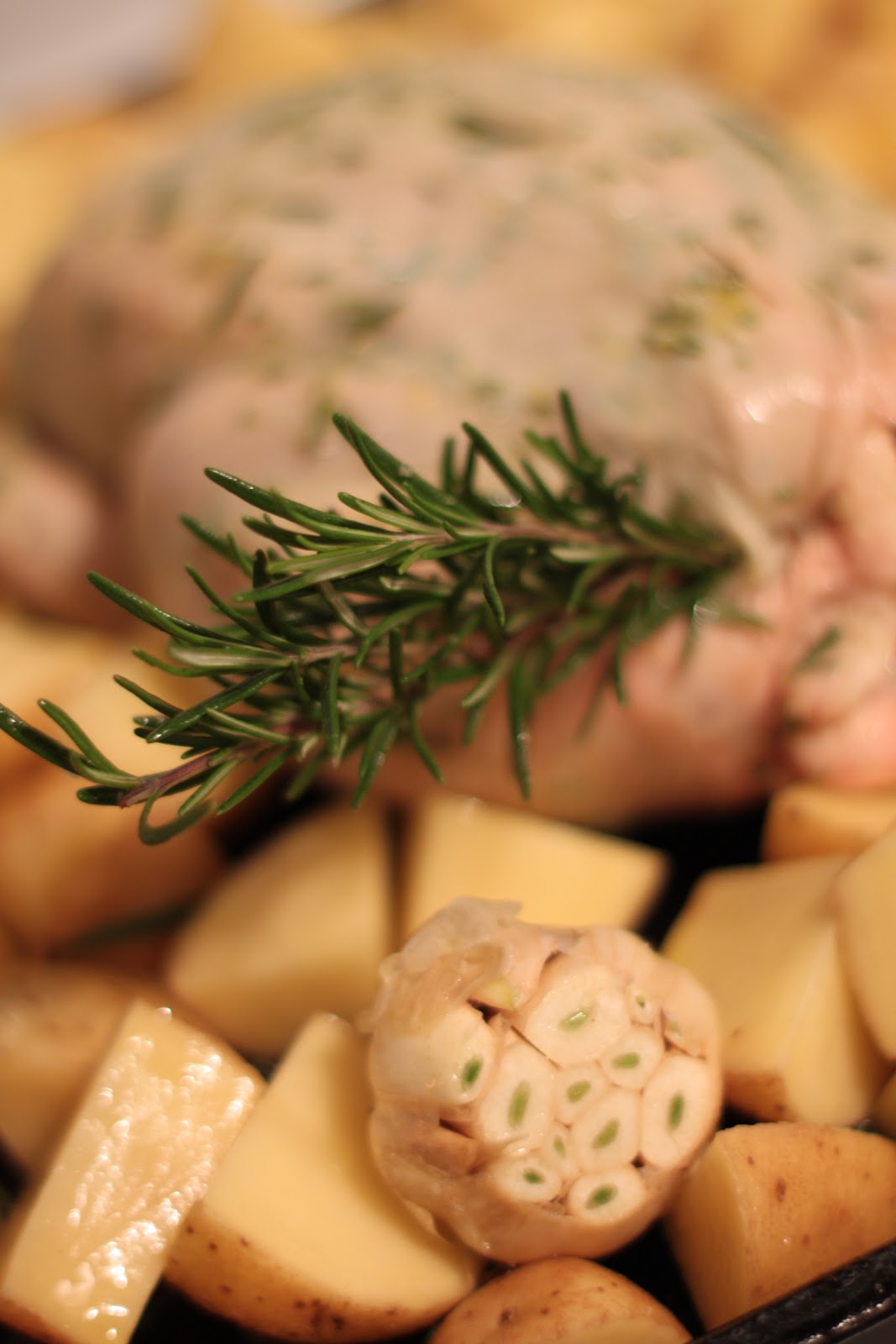
arrosto di pollo al forno- roast chicken in the oven

You will have your guests clucking for this chook. A few simple fresh ingredients and you are on your way to a chicken loaded with flavour.  Flavours from the Mederteranian. In fact when I cooked this chicken recently, my friend questioned my heritage suggesting that I must have Italian roots!
Italian's from North to South will be spending Christmas eve around the dining room table feasting on various seafood dishes (know as the 'vigilia di Natale'). However on Christmas day for lunch the meat makes a grand entrance. Typically a large leg of lamb slow cooked in the oven. Also typically pasta is served as a first course in Italy such as lasagne or cannelloni. However I want to cook something a little lighter as I will be hosting a Christmas dinner. My Italian friends will be arriving at my house after already feasting with their families. I thought a roast chicken to be the perfect meat of choice, especially in the way that I prepare it. Packed with herbie goodness and a lemony zing!
What you need:
One organic chicken (mine was 1.2 kilos)
One bulb of garlic
One lemon
three sprigs of rosemanry
handful fresh sage leaves
a few sprigs of fresh tyhme
1/4 cup extra virgin olive oil
salt and cracked black pepper
How to make:
1: Wash and pat dry the chicken.
2: In a blender place all of the herbs, lemon juice, 3-4 garlic gloves, and olive oil. Reserve on sprig of rosemary.
3: Place the remaining garlic in the cavity also the lemon halves
4: Run your hand between the skin and flesh of the chicken, gently lifting the skin. Stuff under the skin the herb mix, trying to reach every surface, then also rub mixture on the outer surface of the chicken. Then top with salt and cracked pepper. Use a rosemary sprig to close the chicken cavity
5: Place on a oven tray with roast potatoes and cook for roughly one hour in a pre-heated 180 degree oven. Do not be tempted to baste the chicken during the roasting process, this will keep the chicken crispy. The chicken is ready when the juices run clear. Cut the chicken into pieces, serve and drizzle the pan juices over
My Christmas table

patate arrosto- roast potatoes

Wait- before you even think about putting your potatoes in the oven this Christmas, you must read this zingy recipe. Let's just say that I am "pretty much famous" for my roast potatoes! My friend Marybeth requested them on her recent visit, my housemate loves them (and is making them for his family this Christmas in Naples), and last year when I cooked for a house they were frequently asked for. My friend Alberto went crazy for them yesterday when I made them for lunch. In fact I had made enough for 4-6 people as I had planned to have left-overs, but they were so damn delicious, needless to say most of them got eaten (by Alberto of course...ahem)! There is also a running joke in my house that when I cook I always use 'my garden', referring to me constantly opening our kitchen window and picking the herbs I have growing. The rosemary not only adds a lovely flavour but fills your house with a sensational aroma whilst roasting.
Any-way enough of blowing my own potato trumpet. They are so crazy easy to make as all you need to do is wash and chop, no peeling required here- making for a crisper result. The combination of herbs, lemon, salt and garlic makes for perfect bite size pieces of potato goodness.
What you need:
8-10 medium size potatoes (for 4-6 people)
1/2 cup extra virgin olive oil
two medium size juicy lemons
two sprigs of rosemary
a good sprinkling of salt
one bulb of garlic
How to make:
Wash the potatoes well, simply cut the potatoes in even size pieces as photographed below. Remove any imperfections. Cut the lemons in quarters, tear the foliage from the rosemary, place either full heads of garlic or individual cloves in a large oven tray. Drizzle over the olive oil, and sprinkle salt over. Use your hands to massage the oil over the potatoes making sure every surface is well coated. Place in a pre-heated 180 degree oven for about 45 minutes to one hour. Once the potatoes have been cooking for half and hour, use a spatula to turn and loosen.
my herb garden outside my kitchen window


Friday, December 21, 2012

Tronchetto di Natale- Christmas log


This infamous cake has been the talk of my house for the last week, "when are you going to make the tronchetto"? I only recently learnt of this cake when my friend Alessio mentioned it over lunch at my house. It was heavily advised that I should make this 'easy' cake as it is a specialty in Tuscany at Christmas time. He also suggested that this is the most beautiful present to bring to a hosts house. Although it is beautiful, I am not sure I would necessarily describe it as easy, it does take a little effort. Or maybe it is because my first attempt was a complete disaster, from pouring the batter in a pan that was too large for the oven to then accidentally knocking the oven dial to grill- hence a burnt sponge (not to mention many other disasters- yesterday was just one of those days for me). Any-way, clearly together the God's were on my side today, and the cake turned out beautifully. The sponge was fluffy and light as a feather.
Also, coincidentally the following day after Alessio mentioned this cake, my Student Gianluca made one for me. Alessio was right- it is a beautiful cake to receive.
From what I gather the word 'tronchetto' means log in Italian, hence the shape of this cake. The foliage I used to decorate the cake are typically found in florists around Italy at this time of year, I thought them to be fitting to adorn my cake with.
 What you need:
for the sponge cake-
six eggs
150g flour
150g sugar
pinch of salt
one teaspoon vanilla extract or one bag of vanilla powder 
1/4 cup of marsala or alchermes

for the chocolate filling:
130g sugar
six eggs
zest of one lemon
two tablespoons of powdered cocoa 
three tablespoons of flour
250ml of milk

for the chocolate ganache:
250g dark chocolate
one cup of milk
How to make:
To make to sponge cake-
1: Separate the egg yolks from the whites
2: Beat the egg whites with a pinch of salt until stiff peaks form- put to one side
3: Whisk eggs yolks, vanilla and sugar together. Using a metal spoon fold the eggs whites into this mixture very gently trying not to knock the air out of the egg whites
4: Sift the flour in and combine gently
5: Place the mixture onto a baking tray lined with baking paper, and bake in a pre-heated 190 degrees oven for 10-15 minuets
6: Remove from the oven and immediately place on a clean tea-towel lined with sugar (to prevent sticking), cover one end of the sponge with a the tea-towel and roll while the sponge is still hot (as photographed). Allow to rest

To make the chocolate filling:
1: Whisk the eggs, sugar and lemon zest together, sift in cocoa and flour.
2: Place over a low heat and whisk until the mixture starts to thicken, about 5-10 minuets 
3: Add small amounts of milk in, until combined and mixture has thickened- to resemble a thick custard
4: Place in fridge and allow to cool

To make the chocolate ganache:
1: Simply add chocolate and milk together in a saucepan and place over another saucepan filled with boiling water. Stir until the chocolate has melted. Set aside, until the mixture cools and is spreadable

Assembling:
1: Un-roll gently the sponge cake, brush the sponge with the marsala or alchermes. Then fill the sponge with the chocolate cream. Re-roll and cut both end diagonally to resemble a log. Place on the serving platter
2: Cover the cake with the chocolate ganache and use a fork to create pattens in the ganache to resemble a log. Decorate as desired (I used fresh foliage and berries)

Tuesday, December 18, 2012

Ventagli alle olive nere- 'fans' with black olives

Don't even ask me where I got this recipe from- it is something I have been making for years. Now is the perfect time to start making these little pastries of golden, crispy goodness. I am sure that you have many Christmas parties to attend, and these delights are the perfect snack size 'party food'. Not to mention they are really easy to make which is also handy when catering for a gathering. 'Ventagli' in Italian translates to fan, hence the shape of these pastries. It is common to see these in a sweet version, topped with crispy sugar pieces. However, I love this savoury version. The combination of a few simple ingredients really pack a punch. And yes, in this instance I used pre-made pastry- I know, shock horror!!!
What you need:
250g puff pastry ready made (or two large regtangular shapes)
300g salami 
125g mozzarella (fresh)
80g pitted green olives
two sprigs of fresh rosemary
two gloves of garlic
1/2 cup olive oil
How to make:
1: Pre-heat the oven to a high setting, according to the puff pastry packet
2: In a blender, combine all of the ingredients to form a spreadable paste. Add a little more olive oil if needed, use your eye
3: Divide the paste onto the two seperate sheets of puff pastry
4: Starting at the outer corners, turn the pastry over once on each side (about 2cm), then once again to join the two sides together. This should now resemble a long log. Cut the pastry into sections of about 1cm and place onto a baking tray lined with baking paper. Lightly brush with a egg wash
5: Place in the oven for approximelty 15 mintues (again according the intrucitons on the packet of puff pastry). Cook until golden brown

Monday, December 17, 2012

How to make gnocchi- come fare gnocchi

Gnocchi, little fluffy dumpling like parcels. Typically made from semolina flour or regular flour or sometimes both. When made correctly they are light clouds of heavenly goodness. The word gnocchi derives from the word 'nocchio', meaning a knot in wood, or 'nocca' meaning knuckle! As with every Italian dish, there are various ways of preparing and serving, gnocchi is no exception. I have two favourite sauces, one from the North of Italy and one from the South- both are vastly different (I will share these with you soon).
The thing I love about making gnocchi is that although they are not difficult to make, it does take time, patience and consistency. With the anticipation and labour required the finality is accelerated when you can sit at the table any enjoy them. For me it is also a occasion to be spent in the kitchen with good company. The last time I made gnocchi was with my Mother, a lovely way to spend an afternoon. As the school holidays are approaching, a 'gnocchi making day' could be a fun way to keep the kids entertained (for five minutes any-way)?
Remember, a light hand yields light and delicate gnocchi! 
What you need (photographed is for double quantity):
one kilo of potatoes
one egg
300 grams of flour
pinch of salt
                  
How to make:
1: Place the peeled potatoes in a large pot of hot boiling water with a little salt until tender and cooked through
2: When the potatoes are ready strain and as quickly as possible remove the skins while the potatoes are still hot (be careful not to burn your hands). I find using a tea-towel and fork to be of benefit
3: Pass the peeled potatoes through a 'potatoe press', or if you do not have one push though a regular sieve using the back of a spoon, this results in a velvety texture
4: On a large clean bench quickly blend the hot 'mashed' potato with sifted flour and lightly combine
5: Make a well in the centre of the potato/flour and add the egg- lightly whisk and blend altogether. Form together into one big ball, this becomes the dough
6: Using your hands, knead the dough lightly until it becomes pliable and slightly elastic- do not over knead. Knead the dough only as long as it takes to hold the dough together in a workable dough. The less kneading, the lighter and better result you will receive. The dough is ready when you use the tip of your finger and press to make a indent and the dough springs back
7: Cut sections of the dough, and on a well floured surface roll out long strings of the dough. Using the palms of your hands to roll and stretch. Continue this process until you have used all of the dough
8: Use a sharp knife and cut slightly on the diagonal into small gnocchi shapes, place aside again on a floured surface
9: The final step is to use the palm of your hand and roll the gnocchi down a ravioli wooden board, or you can you the back of a fork for the same effect. The purpose of this step is so the gnocchi catches the sauce they are to cooked in
10: Finally, gently drop the gnocchi into a large pot of salted boiling water. They are ready when they float to the top, which will take no more than five minutes. 
11: Remove the gnocchi using a slotted spoon and add to your favourite sauce