“A tavola non si invecchia”. - Italian proverb (At the table with good friends and family you do not become old).

Sharing authentic Italian recipes entrusted upon me through the privilege of being invited into many Italian homes and kitchen’s abroad. I travel, cook, eat, share, learn and photograph my experiences, a truly soul enriching journey. There are now over 100 recipes on this blog to search from. I am a Melbourne born girl who now resides in Pietrasanta, Italy. Sharing my love for food and all things Italian with you. I am not a professionally trained chef, just a person that really loves cooking and has made my passion my reality! Through talent and drive I now work as a private chef in some of the most prestigious private villa`s here in Tuscany, Italy!

Showing posts with label cheese (formaggio). Show all posts

Sunday, November 18, 2018

Pasta al forno con tonno- Tuna bake

It's a balmy Sunday evening and my sister is due home tomorrow as she is currently in hospital with the arrival of our family's first bambino. 
I couldn't help myself. It's like instinct takes over. How can I help I ask myself, as I glance over and discover my favourite brand of tuna and pasta in her pantry (originally put there by me). This would have to be helpful, right? Coming home, and finding a ready made, relatively nutritious meal just waiting to be reheated.
It's almost embarrassing that I didn't go to more effort, and that I am actually posting this recipe. But, once again the best things really don't need to be complicated. Stick to good quality ingredients, such as: Italian tuna in olive oil, fresh mozzarella, basil and good quality pasta. Combined with the correct cooking times, and you have a winning simple dish.
This `pasta al forno`, is basically an Italian version of a tuna bake. I am not typically a pasta bake kind of person, but it is perfect for the purpose of making something in advance. My instincts would also lean towards using penne pasta, however I used casarecce in this, as I took advantage of what was in the pantry.  
It is a written rule in Italy that any form of cheese should never be mixed or topped on seafood. However, when it is canned tuna the rule can be bent a little, and fresh mozzarella is permitted to be added. 
Bake this, and I'm sure that you will agree. This is the perfect summer meal, bursting with classic Italian flavours!
                                
What you need:
700 ml of Italian tomato passata. Homemade is even better.
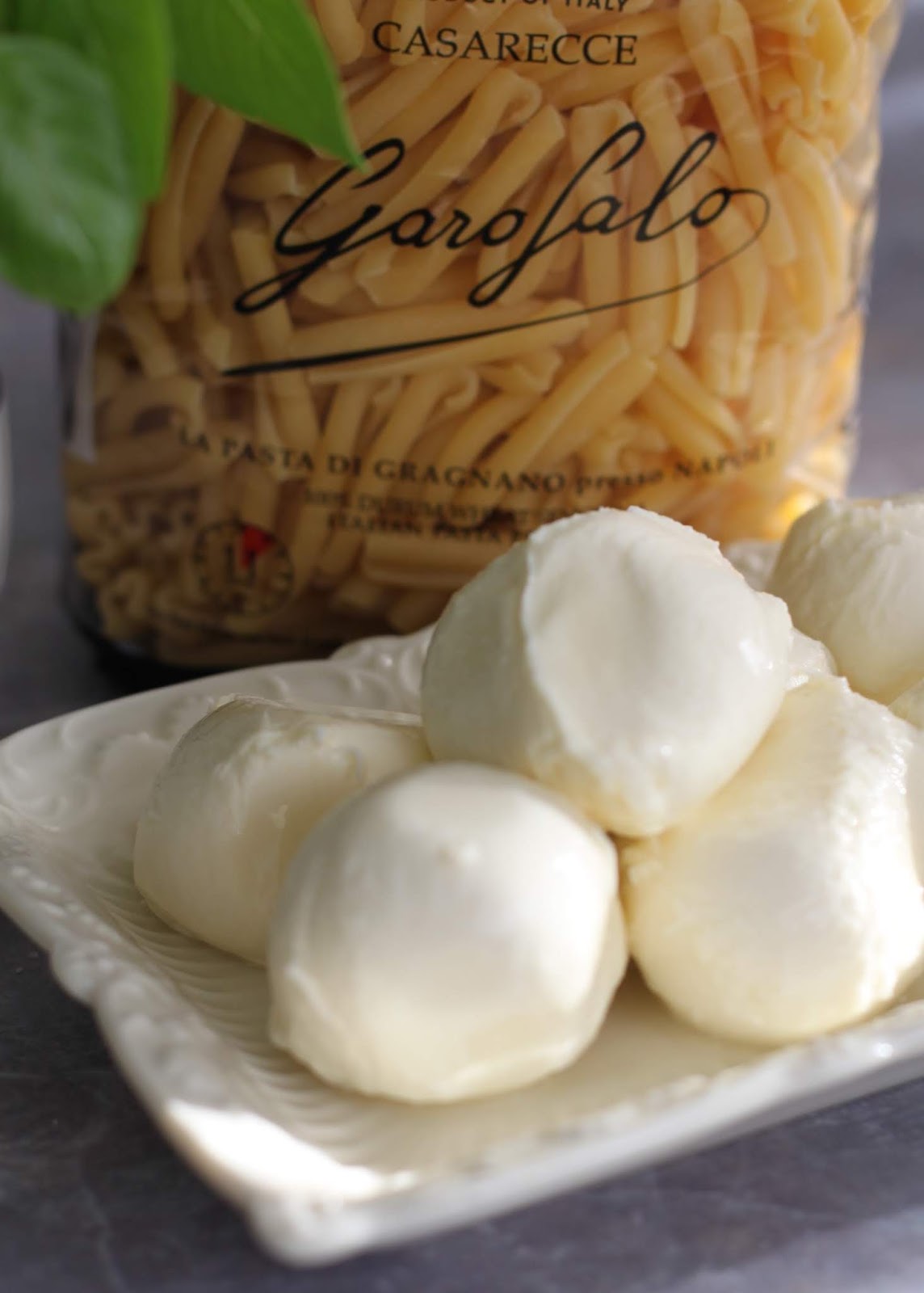
500gm pasta. I used casarecce from Garofalo 
2 x 160g Italian tuna in olive oil. I used Delicious
250g fresh mozzarella
handful of fresh basil leaves
4-5 cloves of organic garlic
good splash of extra virgin olive oil
Sicilian sea salt
How to make:
1: Boil water in a large pot. Add a good amount of salt to the pot. Add the pasta and stir well. Cook the pasta according to the instructions on the packet. If it suggests 12 minute cooking time, drain the pasta at 10 minuets. As it will continue to cook when baked in the oven, you do not want soggy pasta. Drain the pasta and set aside.
2: Lightly smash the whole olive cloves and add to the olive oil. Cook over a light heat, this will infuse the oil with the favour of the garlic. Remove the whole gloves. 
3: Drain slightly the oil from the tuna and add to the pan. Add also a handful of basil leaves. Stir well until it has heated through.
4: Add the tomato passata, salt to taste. Summer for 20 minutes.
5: Add the pasta to the sauce, and stir through to make sure the pasta is coated evenly. Chop the mozzarella into large chunks, and add the chunks to the pasta mix. Lightly stir through.
6: Add the pasta to a large baking tray, typically used for lasagne. Keep in the fridge or bake immediately. Bake for 20 minutes.
#pasta #tonno #tuna #tunabake 

Wednesday, December 30, 2015

Natale sera. Christmas night

I feel like we can still talk about Christmas as the man playing the saxophone on the street outside my window is still tuning away to jingle bells. 
Although some days have passed since Christmas and we are nearly ready to ring in the New Year, I feel like my festivities have not stopped. So I thought I would quickly take a minute before 2016 arrives to talk about my Christmas.
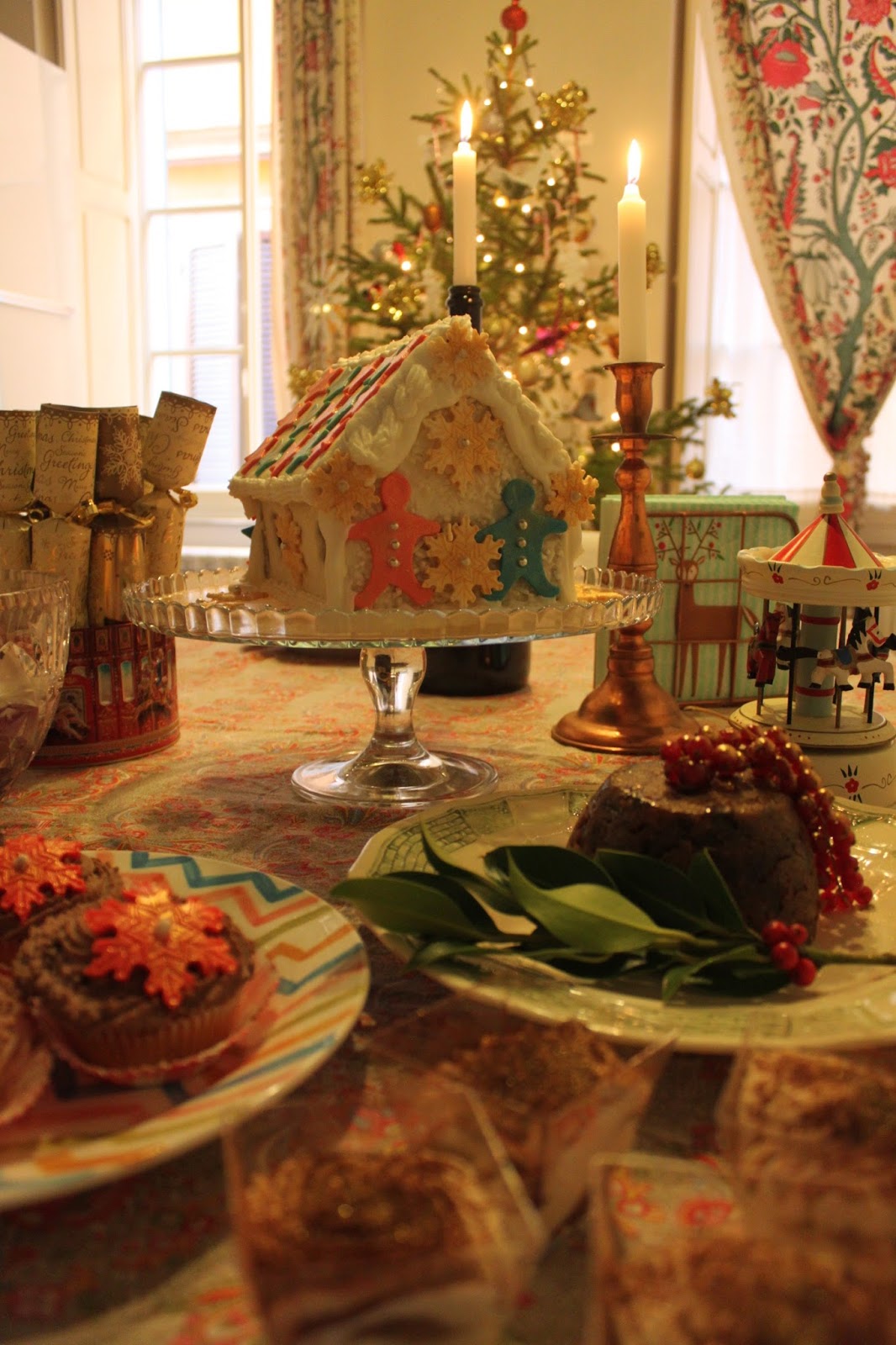
So as I mentioned to the lead up to Christmas I had planned to serve the perfect array of sweets and only a few savoury items at my house on Christmas night. This year I was excited about introducing some new British items to the mix. As my friends are familiar with how I host my Christmas parties they came prepared after long tummy filling lunches at home with an appetite for sweets. However this was the first year I was sharing it with my boyfriend, his friends and family.
For those who know me well, know that I like things to be perfect (although I have become much more relaxed in my ageing years). Before a party I like the house to be spick and span, the table to be set and organised and every detail catered for. I also like to have the candles lit, music playing and have myself fully ready before quests start to arrive, allowing myself to be an attentive host.
My boyfriend early evening told me to relax and invited me to cozy up on the couch for a minute, I thought even though I still have things to do I will appreciate the moment we have together and take the invitation to snuggle into his embrace in my pyjamas.
Of course, you know where this story is going. Brrring brrring, the door bell rings. It`s the brother, sister-in-law and child of Alessandro (Alewho arrived an hour earlier than the 9pm invitation time. Any-way the evening kicks off from there, I`m a little caught off guard but whip myself into a frenzy and put everything quickly into place, including dressing myself! The door bells continues to ring and a flow of guests keep arriving. Everyone is wowed by the array and presentation of food. Until one friends says....ummm but Kara I`m starving and want to eat something savoury. So I start pulling out as many things that I have to offer. 
Halfway through the evening Ale tells me he is ducking out for a second to grab a bottle of champagne he left in the car. I try to persuade him to stay as the table is already filled with magnum`s and there is no absence of wine. Time passes and I notice his disappearance.  I ask a friend about his absence and remain in shock when the answer is he has returned to his family home for food. Mostly because I feel that I have poorly catered for the party. But then I take a chill pill and remember after all that I am living in Italy, and you can never have too much food. Half and hour passes and the `hero` walks in the door with two shopping bags filled with goods. I can't rememeber if there was a round of applause, I think so. It was as if he had been to the local supermarket. The two bags were filled with salami bigger than my arms, a wheel of pecorino cheese bigger than my head,  olives and various preserves and bread (the most essential item for any Italian table). Although I nearly hit him over the head with the salami I couldn't but help see the funny side of this. Like who just has that much produce lying around at home? The answer, an Italian family!

The night proceeds with lots of laughs, singing, some latin dancing, firing opening bon bon`s, celebrating, dressing up, telling stories and eating and drinking....probably too much.

For me the most precious moment of the evening was drowning the Christmas pudding with brandy with the six year old nephew. With the lights turned off and seeing the explosion of flames as the match hit the brandy was nothing less than spectacular. Seeing the sheer look of excitement on the little boys face will be something I will always treasure. Passing on and sharing my British tradition of igniting the pudding amongst my friends made living away from home on Christmas that little more tolerable.
                   
The drunk brandy Christmas pudding aflame
Ginger biscuits with gorgonzola and walnuts 
riccarelli biscuits, a Tuscan tradition at Christmas time 


Tuesday, August 21, 2012

Carpaccio di manzo (raw beef carpaccio)

On my first visit to Rome many years ago I found myself in little Trattoria down a hidden lane-way. It was perfect, it was everything I had every dreamed of and more. The waiter spoke no English but I was enthusiastic to speak the limited Italian I knew back then.  There was no menu and the waiter proceeded to reel off the specialties of the day quickly in Italian, I completely bluffed my way through. Any-way the short of the story is that I unknowingly ended up ordering several different forms of 'carpaccio', raw meat. This to me now would not be so shocking, but back then it was a little overwhelming. I am a big fan of a single dish of carpaccio, especially when I know what to expect. 
Carpaccio is a dish consisting of thinly slices of raw meat, traditionally beef. It was invented at Harry's Bar in Venice, where a Countess had requested it. Her Doctor had advised her to be on a special diet including that of raw meat.
I love the different textures and flavours, especially the creamy subtly of the meat. There are many recipes and additions that you can add to carpaccio, but in my experience it is simply served with rocket and parmesan. You can cure it in lemon juice for a longer amount of time if desired.
What you need:
200g top quality beef (100g per person)
handful of rocket leaves
freshly slivers of parmesan cheese
lemon juice
freshly cracked black pepper and a pinch of sea salt
200g beef eye fillet 
How to make:
1: Slice the beef in the thinnest possible slices (Jamie Oliver once suggested to place the beef in the freezer to harden beef, making it easier to slice OR ask your butcher to thinly slice for you but it may brown so use it quickly). I slice it myself
2: Arrange thin slices of beef on a plate, squeeze fresh lemon juice and oil over meat (cover and place in the fridge for 10 minutes if you want the meat to cure). I let mine rest for 5 minuets.  
3: Place rocket leaves and slices of Parmesan on top, drizzle with a little oil, finish with pepper and salt
taking a rest in a door-way in Venice

Friday, August 17, 2012

Acini di pepe in brodo (pasta in broth)

This one is perfect for combating the sniffles that seem to be prevalent during these cold winter months. Making this soup actually reminds me of making it for a friend last year in Italy as he was suffering from a severe case of 'man flu'. He requested it on a cold blistery day, but it had to be just as his Mamma makes it. It is the same concept as 'tortellini in brodo' (refer to recipe), but the tortellini is replaced with the cutest little balls of pasta called 'acini di pepe' which translates to peppercorns. As mentioned in my post for tortellini in brodo, it is common in the south of Italy to add freshly squeezed lemon juice and chili flakes. I think it also works perfectly in this instance. A concept my Tuscan friends initially found bizarre, but have embraced. I think for the purpose of fighting a cold, the chili helps clear the nose and the lemon add freshness. Of course, no matter what region you are from in Italy it is would be sacrilegious not to add freshly grated parmesan. A bowl of this humbling soup will have you feeling better in no time. 
What you need:
one cup of acini di pepe 78 (available from delicatessen's)
one litre of homemade vegetable or chicken stock
sprinkling of freshly grated parmesan
optional:
lemon
chill flakes
How to make:
1:  Make home-made vegetable or chicken broth (refer to my broth recipe)
2: Bring one litre of broth to the boil, add 1/2- 1 cup of pasta (depending on if you prefer more pasta or broth). I add about 3/4 of a cup
3: Cook with a lid on for about 10 minuets, according to directions on the packet of pasta
4: Serve immediately, squeeze some lemon juice, chili flakes and grate parmesan
In Verona, Italy during Winter

Monday, July 9, 2012

Ricotta di casa (homemade ricotta)

There are so many Italian dishes that call for ricotta! I personally use ricotta to make popular Sicilian deserts, cannoli (refer to my recipe) and ricotta baked cheesecake. I also use it often to fill ravioli. However there is a endless amount of dishes that ricotta can be added to, such as lasagne, crepes, cakes, cassata, calzone, and pizza. But why add ricotta to dishes when you can enjoy it fresh and warm on a crusty piece of bread.  Simply spread a generous amount on top and sprinkle with a little cinnamon, honey, citrus peel or pistachios!
I had the pleasure of being invited to collect fresh goats milk on an Italian island last year. This entailed hiking up a steep mountain in the wee hours with an empty bucket. The joy was returning down the mountain with a full bucket of warm milk and returning the kitchen to commence the ricotta making process. I will forever remember fondly the aroma of warm milk being cooked. After we collected the curds, I was offered a full cups of hot whey to drink as it is a high source of protein. My cooking companion had such a look of delight as he offered the glass, as if he was presenting me liquid gold.
Remember little Miss Muffet who ate her curds and whey. Well ricotta is made when a chemical process occurs when a milk product is mixed with acidity.  That is why it is so easy to make at home, as it is  simply case of removing the curds from the whey once the acidic is added. You can use lemon juice or vinegar as your weapon of acid.
It is a certainty that the ricotta available in Australia is made from cows milk. However in Italy varieties include goat, buffalo, and sheep milk (it can be confusing at times to choose). I prefer sheeps milk for its delicate flavour and I use it for most of the dishes I make.
Homemade ricotta tastes so much better as it is creamy, rich yet delicate. I also think the love needed to make it certainly adds to the flavour. It is so rewarding.  I guarantee once you make your own you will be hooked, and even a little chuffed with yourself.
What you need:
one litre full cream organic milk
1/4 cup apple cider vinegar
one teaspoon salt

How to make:
Step 1: Bring milk to 180-185 degrees, pre-boiling point
Place the milk in a large heavy pot, using a thermometer bring the milk to 180-185 degrees.
Step 2: Add vinegar & salt to milk, curds start to form
Remove the pot from the heat and add the apple cider vinegar and salt, stir gently for about a minute. Cover pot with a cloth and top with lid.  Let it sit untouched for two hours.
Step 3: After two hours resting, scoop out curds
 Use a slotted spoon to scoop out the curds from the whey, they will be visually obvious.
Place the curds in a strainer lined with fabric moistened by warm water (muslin if available, if not a clean cotton tea-towel). Use your hands to remove excess liquid.  Then either cover and let sit or tie in a ball.  Hang the ball over a bowl and allow any liquids to drain.  The ricotta should be set and be ready to eat after two hours. Eat while it is still warm. It can last in the refrigerator for about five days.


Tuesday, May 29, 2012

Lasagne

This hands down is one of my favourite things to make, although I rarely do.  Although it is simple to make, it is a tedious process which results in a sense of occasion.  I normally set aside at least half a day to make it, especially when making my own lasange sheets.  I always make more than required as it is always nice to have left-overs, especially when it has taken so much effort!
As discussed in my "ragu alla bolognese' recipe, there are many different ingredients that can be added- no two recipes are the same.  I have tasted different varieties of lasagne where various cheeses have been used, such as ricotta and mozzarella (not the soapy variety we buy in Australian supermarkets). A friend's Sicilian grandmother used to add a thin layer of whisked eggs resulting in a creamy, rich texture.  I like to keep mine simple, I have learnt in this instance "less is more"- a wise Italian woman taught me this!
The main four key fundamentals needed are: meat sauce, bechamel sauce, pasta sheets, parmesan cheese.
Invite your best friends over to share in the fruits of your labour!
What you will need (this will make two large lasagne trays):
1: Bolongese sauce (refer to recipe)
2: Bechamel sauce (refer to recipe)
3: Make fresh pasta sheets (refer to recipe), or buy fresh pasta sheets (about 700g)
4: 250g finely grated FRESH parmesan cheese (you can ask your local deli to grate for you)
How to make:
1: Make the meat sauce first, set aside
2: Make the bechamel sauce, set aside (if it becomes too thick add a little milk)
3: Cook the pasta sheets in salted boiling water, remove and place on tea-towel
4: Spread a thin layer of meat sauce in large tray, cover with pasta sheets and cut to size, spread pasta sheet with bechemel sauce, sprinkle generously with grated Parmesan cheese
5: Repeat this process until you have used all of the ingredients.  There should be 4-5 layers of pasta.  Top the final layer of pasta with a generous amount of bechamel sauce and grated parmesan cheese.
5: Cover with tin foil and place in the fridge (leave overnight to enhance flavour)
6:  Cook in a pre-heated 180 degrees oven for 1/2 hour, remove foil and cook a further 10 minuets until golden.
Buon apetito!

Thursday, November 10, 2011

Crostini con salsiccia (Crusty bread with sausage meat)


This is one of my favourite snacks that is so simple to make and is soooooooooo tasty!  I first had this delicious snack accompanied with a glass of red wine for "apertivo" in Florence.  Although not so forgiving on the waist line this snack is pure indulgence.  Make sure you buy good quality Italian sausages and not the supermarket variety.  I saw this served in Florence topped with melted provolone cheese however it is most common in Tuscany to be mixed with my favourite cream cheese "stracchino".  Drizzle with a little truffle oil for a heavenly delight.
What you need:
Two good quality homemade Italian sausages
200g stracchino cheese (a creamy, sharp flavoured cheese)
10 slices of crusty bread sliced thinly
Truffle oil for drizzling
How to make:
1: Remove the skin from the sausages and combine in a bowl with the cream cheese.  
2: Cut the bread slices to be about a centimetre thick and place in the oven for about ten minutes until crisp
3:  Spread the sausage and cheese mixture on top of each slice and place back in the oven for about five minutes
4: Drizzle with a little truffle oil and serve hot
A place in Florence to try this:
Le Volpie e Luva
Piazza de' Rossi 1
50125  Firenze
+39 055 239 8132
http://www.levolpieluva.com/Le_volpi/Home.html

Buon Apetito


Tuesday, November 8, 2011

Zuppa di cipolle (onion soup)

This soup represents everything Tuscan:  Rich in flavour, simple to prepare, and cheap on the pocket.  As the weather progresses to be cold and rainy in Italy this soup really warms the cockles. It is so simple and easy to prepare and so decedent to eat.  I recently made this for a very delighted group of Italians and enjoyed it with a glass of red wine.  Serving the individual bowls from the oven with bubbling melted cheese really has an impressive effect.
                          
What you need:
One kilo of finely sliced onions
80g butter
40g white flour
One litre of homemade meat stock
Crusty bread sliced
Fontina cheese
Salt and Pepper
How to make:
1: Gently fry the onions and butter in a earthenware dish, stir with a wooden spoon to prevent from sticking.  Cook until the onions become soft and translucent
2: Continue to stir and gradually sprinkle with flour
3: Add the warm stock slowly and blend thoroughly
4: Cook over a lower heat for 20 minutes, stirring occasionally
5: Add salt and pepper to taste
6: Place slices of bread in the middle of soup bowls, top with cheese.  Cook in the oven at 180 degrees until the cheese has melted
Buon Apetito