“A tavola non si invecchia”. - Italian proverb (At the table with good friends and family you do not become old).

Sharing authentic Italian recipes entrusted upon me through the privilege of being invited into many Italian homes and kitchen’s abroad. I travel, cook, eat, share, learn and photograph my experiences, a truly soul enriching journey. There are now over 100 recipes on this blog to search from. I am a Melbourne born girl who now resides in Pietrasanta, Italy. Sharing my love for food and all things Italian with you. I am not a professionally trained chef, just a person that really loves cooking and has made my passion my reality! Through talent and drive I now work as a private chef in some of the most prestigious private villa`s here in Tuscany, Italy!

Thursday, June 28, 2012

Affogato (ice-cream drowned in coffee)

The literal translation for 'affogato' is drowned.  Generous scoops of vanilla ice-cream drowned in espresso coffee....hmmmmm.  This is so simple to prepare yet it feels so decadent.  I always hover over my bowl trying to savour every mouthful before the hot coffee melts away my ice-cream. My favourite part is the tiny crystallised pieces of concentrated coffee that form on the outer edges.  I also love the steam that arises as the hot coffee hits the cold ice-cream.  It is also common to add a shot of liquor such as amaretto. 
If you have a espresso machine at home, simply pour a shot over balls of vanilla ice-cream.  If not, use a coffee pot as shown above.  There are three balls of ice-cream with 1/4 cup of coffee in the opening photograph.

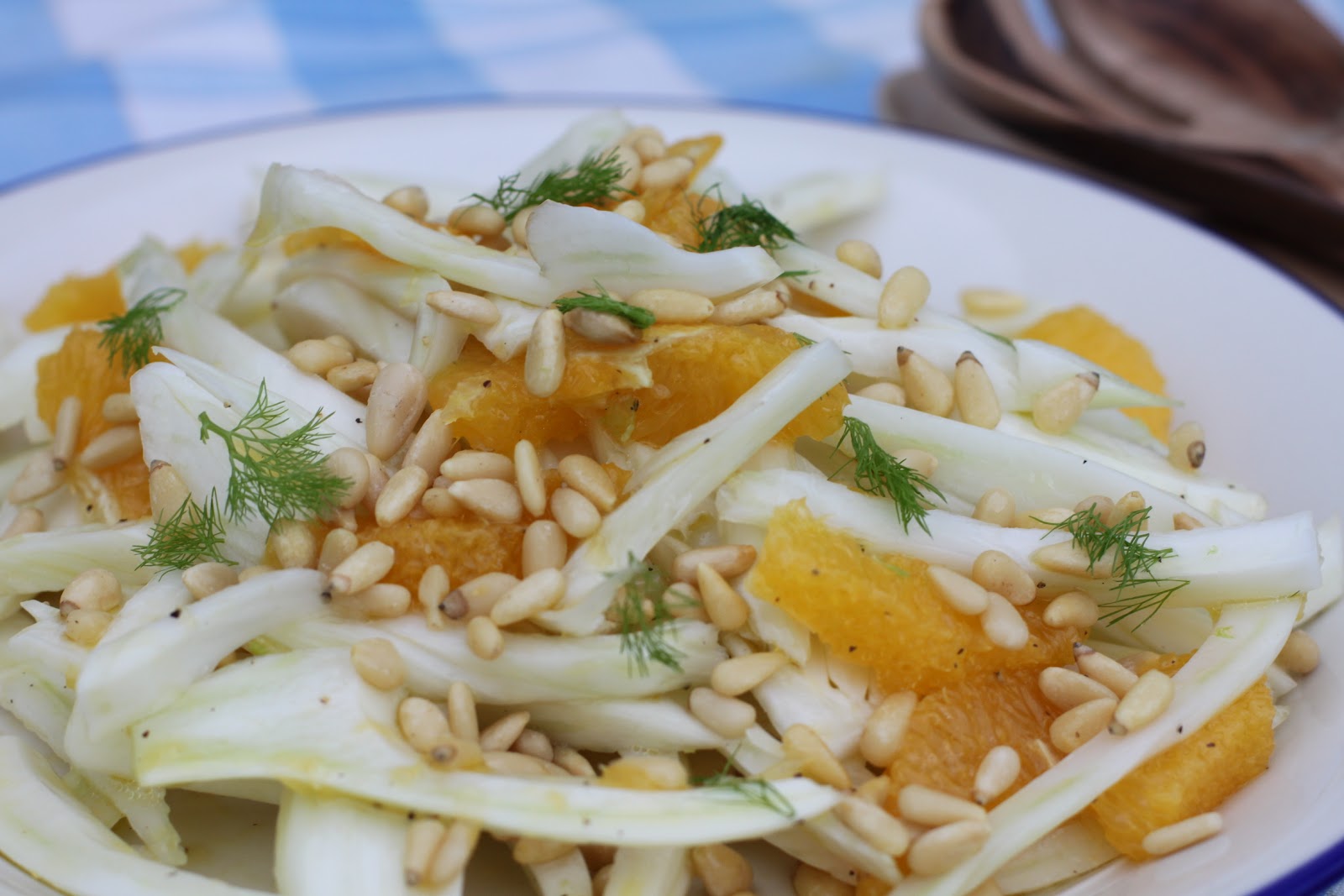
Insalata di arance e finocchi (fennel and orange salad)


There is something to say about nature providing seasonal produce that is complimentary.  This salad is a perfect example of that.  Without surprise fennel and orange are both in season at the same time.  The bitter aniseed flavour of the fennel is softened by the sweetness of the orange. Also the textural differences  bounce in the mouth.  This salad is so easy to prepare and is really affordable.  People seem to view fennel as a rather exotic  vegetable, but this recipe is fuss free and sure to impress at your next gathering. This salad is a healthy way of eating as the ingredients are presented in their raw state.  When eating this salad close your eyes and dream of the Mediterranean, it's the closest you'll get! 
What you need (serves 4):
One large fennel
two medium size oranges
1/2 cup pine nuts
1/4 cup white wine vinegar
1/4 cup olive oil
salt ad freshly cracked pepper
How to make:
1: Remove stalk of fennel, reserve fine leaves for decorating salad.  Clean under running water.  Remove bottom of fennel, then slice to medium thickness.
2: Remove rind of orange, and cut into segments.  I hold orange in one hand and use a sharp knife to remove segment, disregarding the pith. Using my wrist to rotate as I continue to slice.
3: Place fennel, orange and pine nuts into a bowl.  Dress with combined olive oil and white wine vinegar.  Season accordingly with salt and cracked black pepper.
4: Place salad on a serving place and use fine fennel leaves to decorate

Friday, June 1, 2012

"Festa di ossobuco" (ossobuco party)

Today a dear friend reminded me of this moment, and I just laughed out loud.  I thought it needed to be shared with you, hoping that you too will have a giggle.  This photograph was taken in Viareggio of me riding my bike over to a house filled with expecting hungry Italian mouths (I am using my phone to txt for the address).  In the front basket is a large saucepan filled with ossobuco.  I think originally my bike was also loaded with wine bottles and bread on the back, but I found it hard to keep my balance.  The 'ossobuco party' was hosted by my friend Stefano (ciao Stef), who helped in the preparation of the much anticipated evening.  The deal was I could make the ossobuco if Stefano purchased the meat from his much trusted butcher. We then prepared the accompaniment of 'risotto alla milanese' once I arrived with the ossobuco!
This is a dish I have loved making for many years. It is almost a tradition for me to make it as soon as the winter months hit as it really is a soul warmer. I will soon share with you the recipe!
Ciao x
Stefano serving the risotto!

Thursday, May 31, 2012

Arista di maiale al latte (roast pork in milk)

This recipe is not for the faint hearted- vegetarians look the other way!  I was surprised when I first learnt of this method of roasting pork- cooking meat in milk?  It truly is wonderful, and I suggest next time your think of roasting a leg give this recipe a try.  Not only was the meat super tender and filled with flavour, the table were engaged with talk about how this result was achieved.  This particular leg of pork was a whopping five kilos, but was served to a large table of fifteen.  The general rule of thumb is to cook one litre of milk to one kilo of meat. The milk adopts all the flavours of the meat, vegetables and herbs, the carrot helps to colour the sauce and the potato helps to thicken- creating a perfect natural gravy. Serve the roast pork with the 'milk gravy', roast potatoes and a side of buttered spinach! It is also nice to have some roast meat left over for the next day. I used the remaining meat to fill homemade focaccia's with rosemary...so good!!! 
What you need (remember one litre of milk to one kilo of pork):
leg of pork (I used 4.8 kilo..HUGE)
four litres of milk
1 onion roughly sliced

two carrots roughly sliced
two cloves of chopped garlic
one potato chopped roughly
fresh sage and rosemary
two tablespoon butter
one tablespoon olive oil

rock salt and cracked black pepper

How to make:
1: Pre-heat oven to 160 degrees.
2: Put the pork in a deep pan baking pan
3: Warm the milk and butter and add to baking pan, the pork should be half submerged in milk
4: Add the remaining ingredients loosely around pork
5: Rub rosemary, rock salt, garlic and cracked pepper in pork (get in all the creases)
6: Place pork covered in tin foil in oven, mid shelf
7: If you are cooking a large pork, then keep covered until the last one hour, then remove foil.  Or if you a cooking a standard size pork of one kilo, there is no need to cover at all.  The general guideline is to cook in a low oven, one hour per kilo of meat.
8: Remove the meat from oven, cover in tin foil and allow to rest for 20 minutes- keeping all the lovely juice inside!
9: Strain the remaining milk juices into a small saucepan, ensure all fat is skimmed and chunks removed.  Passing it through a sieve will ensure a creamy, smooth gravy
10: Carve slices of meat and serve generously with gravy!
Buon apetito!


Tuesday, May 29, 2012

Pasta con verdure miste (mixed vegetables with pasta)

Today I found myself scrolling through my endless photographs of food. Time has not permitted me to write about even half of them.  Given that today is Tuesday and this dish is so quick and simple to prepare, I thought I would share with you- perfect for a mid week whip up!  I have listed all of the vegetables used in this instance, but of course you can substitute for your favourites.  The key is to select fresh and seasonal produce, you can't go wrong!
What you need:
two medium eggplant plants
two medium shallots (red onion)
one yellow capsicum
one punnet roma baby tomatoes
5-6 garlic gloves smashed
handful fresh basil
1/2 cup extra virgin olive oil
salt and cracked black pepper
fresh pasta 
How to make:
1: Cut the vegetables roughly the same size.  Cut the tomatoes in half.  Smash garlic gloves and roughly chop.  
2: Place vegetables evenly on a large oven tray.  Drizzle over oil, salt and pepper.  Use your hands to make sure vegetables are evenly coated in oil.
3: Place in a pre-heated 180 degrees oven for 30-40 minutes or until vegetables are cooked through.
4: Add cooked vegetables to drained and lightly oiled fresh pasta (remember to add salt to pasta water), gently stir through.  Tear fresh basil leaves on top.  Squeeze a little lemon juice if desired!


Lasagne

This hands down is one of my favourite things to make, although I rarely do.  Although it is simple to make, it is a tedious process which results in a sense of occasion.  I normally set aside at least half a day to make it, especially when making my own lasange sheets.  I always make more than required as it is always nice to have left-overs, especially when it has taken so much effort!
As discussed in my "ragu alla bolognese' recipe, there are many different ingredients that can be added- no two recipes are the same.  I have tasted different varieties of lasagne where various cheeses have been used, such as ricotta and mozzarella (not the soapy variety we buy in Australian supermarkets). A friend's Sicilian grandmother used to add a thin layer of whisked eggs resulting in a creamy, rich texture.  I like to keep mine simple, I have learnt in this instance "less is more"- a wise Italian woman taught me this!
The main four key fundamentals needed are: meat sauce, bechamel sauce, pasta sheets, parmesan cheese.
Invite your best friends over to share in the fruits of your labour!
What you will need (this will make two large lasagne trays):
1: Bolongese sauce (refer to recipe)
2: Bechamel sauce (refer to recipe)
3: Make fresh pasta sheets (refer to recipe), or buy fresh pasta sheets (about 700g)
4: 250g finely grated FRESH parmesan cheese (you can ask your local deli to grate for you)
How to make:
1: Make the meat sauce first, set aside
2: Make the bechamel sauce, set aside (if it becomes too thick add a little milk)
3: Cook the pasta sheets in salted boiling water, remove and place on tea-towel
4: Spread a thin layer of meat sauce in large tray, cover with pasta sheets and cut to size, spread pasta sheet with bechemel sauce, sprinkle generously with grated Parmesan cheese
5: Repeat this process until you have used all of the ingredients.  There should be 4-5 layers of pasta.  Top the final layer of pasta with a generous amount of bechamel sauce and grated parmesan cheese.
5: Cover with tin foil and place in the fridge (leave overnight to enhance flavour)
6:  Cook in a pre-heated 180 degrees oven for 1/2 hour, remove foil and cook a further 10 minuets until golden.
Buon apetito!

Monday, May 28, 2012

RagĂą alla bolognese (bolognese sauce)


I can see Italian's now throwing their hands in the air "ai ai ai that's not how you make it"!!  
Yes, there are many ways to make bolongese sauce, and admittedly I change the way in which I make it from time to time.  Today, I simply decided to share with you the way in which I made it today, trust me there were no complaints!  This recipe has the fundamentals of how I usually make my sauce, and is perfect for winter!
The first known reference to "ragu alla bolognese" dates back to the late 18th century originating from Bologna.  It is traditionally served with tagliatelle pasta. There is so much love, care and attention needed when making ragu. My theory is that if I go to the effort needed to make the sauce, then I always make my own fresh tagliatelle pasta. 
Last year I gave my Italian friend a `care pack`, which included a container of my ragu, pasta and some other items. On Sunday he invited his Mother over for lunch, and unbeknownst to me served my sauce and pasta. His Mother took a mouthful, there was silence,  then her eyes welled with tears as she said that this pasta takes her back to her childhood, when her Nonna used to cook the same tasting sauce. Filled with aromatic spices. I still get a little chocked up thinking about that special moment. That food can play such an important part of our memories, emotions and encounters.  
On a visit to Bologna it confirmed that using a variety of meats is the key to making a more complex sauce, and traditionally it was made using predominantly veal.
I have tried and loved many sauces, from the North to the South of Italy (the sauce becomes lighter and more tomato based further south).  Each sauce is different, and each household holds a secret! 
This is a robust sauce, that I feel respects the origins and authenticity!  Serve with fresh homemade pasta, top with freshly grated parmigiano cheese and enjoy with red wine. Bliss! 
What you need:
500g mince beef
250g mince veal
250g mince pork
four juicy Italian pork sausages 
two x 400g tomato pulp tins (made in Italy)
1/2 cup olive oil
one onion
two carrots
two celery stalks
5-6 gloves garlic
handful fresh parsley
handful fresh sage
handful fresh oregano
large sprig of rosemary 
1-2 tablespoon fresh grated nutmeg
three bay leaves
500mls red wine
three cups beef stock (homemade)
two tablespoon tomato paste/concentrate
salt and black pepper to taste
How to make:
1: First you need to make the 'sofritto' (the Italian term for combining evenly chopped pieces of carrot, onion, celery, garlic and parsley to a pan).  Cooked the vegetables in the olive oil until soft.  TIP: add a little salt which will help slow down the cooking process and result in perfectly soft, translucent onions.
2: Add the mixed meats to the large saucepan and lightly brown.  Continue to stir and make sure meat is evenly cooked through.
3: Add the herbs, nutmeg, salt and pepper- stir through.
3:  Add the wine and cook for a further five minuets.
4: Add the remaining ingredients.  Cover and simmer, occasionally stirring for two hours.  Make a day ahead to allow the flavours to deepen!
rooftop view over Bologna
pasta making with Stephanie